Electrical & Computer Engineering
Image
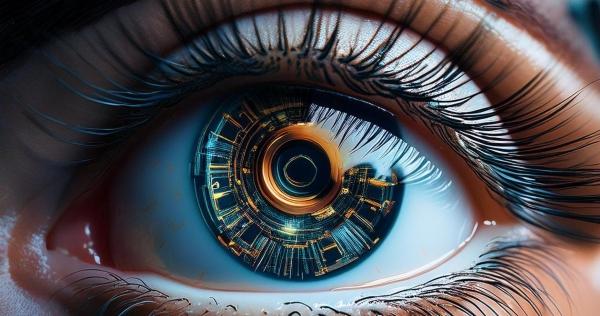
graphic of an eyeball


As Industrial Robots Become Autonomous, NJIT Helps Keep Them Connected

A team led by Prof. Arnob Ghosh of ECE Dept at NJIT and four partner universities is transforming factory and warehouse connectivity by turning walls and ceilings into programmable “smart reflectors” (reconfigurable intelligent surfaces) that actively steer Wi-Fi to moving robots—preventing dead zones without blanketing facilities with more access points. Their award-winning kernelized bandit learning approach lets the wireless infrastructure adapt in real time to robot motion and changing conditions, and is now scaling toward coordinating multiple robots with competing link demands. (Read More)

2025 Donald K. Blackman ECE IAB Academic Excellence Award

The ECE Department Congratulates the 2025 Donald K. Blackman ECE IAB Academic Excellence Award winners, Sophomore: John Girgis, Junior: Carlos Estevez and Senior: Timothy Knowles for their academic performance. Read More


ECE PhD Student of the Month Highlight - 2026:

Public Best Value College in New Jersey
-The Wall Street Journal
for return on investment
PayScale.com
LEARN MORE

Meet Some of Our Students

  • Hilsson Angeles
    NJIT was my dream school."

    Hilsson Angeles

  • Seif Issa
    Getting a degree from a great school like NJIT gave me the opportunity to choose the job I wanted."

    Seif Issa

M.S. in AI Engineering

What is this program about?

  • Preparing engineers to use AI and ML in communication systems, transportation systems, smart grids, biomedical systems, materials engineering, and chip or embedded design.
  • Teaching how AI integrates with software, data, and the hardware needed for efficient execution.
  • Providing practical training to succeed in engineering roles that increasingly rely on intelligent systems.

Why do we want this program?

  • Hardware such as GPUs and accelerators is an important enabler of Al technologies.
  • Al strengthens innovation in electronics, automotive, aerospace, civil, and industrial engineering.
  • Engineering fields depend more on data-driven decision making, and Al improves performance, accuracy, and cost.

How can I learn more?

SHE & Outreach

The Helen and John C. Hartmann Department of Electrical and Computer Engineering is deeply committed to inspiring and engaging future innovators through a variety of dynamic outreach programs. We believe in fostering a passion for technology and problem-solving from an early age, and our initiatives are expertly led and facilitated by our dedicated team of Lab Technicians.

Through hands-on workshops, interactive demonstrations, mentorship opportunities, and school visits, ECE is a leader in:

  • Sparking Curiosity: Introducing fundamental concepts in electrical and computer engineering in fun and accessible ways.
  • Building Skills: Providing opportunities to develop critical thinking, teamwork, and technical abilities, guided by the practical expertise of our technicians.
  • Showcasing Real-World Impact: Highlighting the exciting and diverse career paths available in these fields and the positive impact our work has on society.
  • Creating Connections: Fostering relationships between our faculty, students, the broader community, and the invaluable technical knowledge of our Lab Technicians.
  • Promoting Inclusivity: Encouraging participation from underrepresented groups in STEM, supported by the mentorship and guidance of our technicians.

Explore the programs like SHE in ECE below to learn more about how our ECE is shaping the future of electrical and computer engineering and how you can get involved!

BS_MS Programs at ECE

Students with 3.0 or above GPA are eligible for the BS/MS program. Once admitted to the program, you may take up to a total of three graduate courses as an undergraduate student. These courses with "B" or higher grades  can be counted both toward your undergraduate and graduate degrees at NJIT. Students must maintain a minimum of GPA to stay in the BS/MS program. 
 
Graduate credits are good for seven years from the semester the course is completed. Students are encouraged, but not required, to continue their master's program upon completing their undergraduate degrees. 
 
Students interested in the program must apply at 
 
Students must inform the Associate Chair for Graduate Studies before they would like to start the MS studies upon completing their bachelor's degree.
 
BS/MS programs available in ECE
  • BS/MS Computer Engineering
  • BS/MS Electrical Engineering
  • BS/MS Power and Energy Systems
  • BS/MS Telecommunications
* The department will follow all university policies and guidelines pertaining to the BS/MS program, and will implement any updates or changes as they are made.

ECE - Focus Areas: Photonics, Nano and Quantum Materials and Devices (PNMD)

The research projects conducted by electronics and photonics faculty are multidisciplinary and heavily collaborative. There is also an intense focus on transferring today's research activities into commercial enterprises.

RESEARCH ACTIVITIES:

  • Materials growth by molecular-beam epitaxy (MBE) including novel compound semiconductor heterostructures and epitaxy of quantum wires and dots
  • Semiconductor device physics
  • High-power solid-state electronics
  • Advanced photonic devices, Nanophotonics and Photonic integrated circuits
  • Electromagnetic theory and antennas
  • Fiber-optic networks
  • Optoelectronic transceivers
  • Silicon photonics
  • Space optical communications using high-speed optical links
  • Optoelectronic/electronic integration and co-design

LABORATORIES:

CENTERS: